
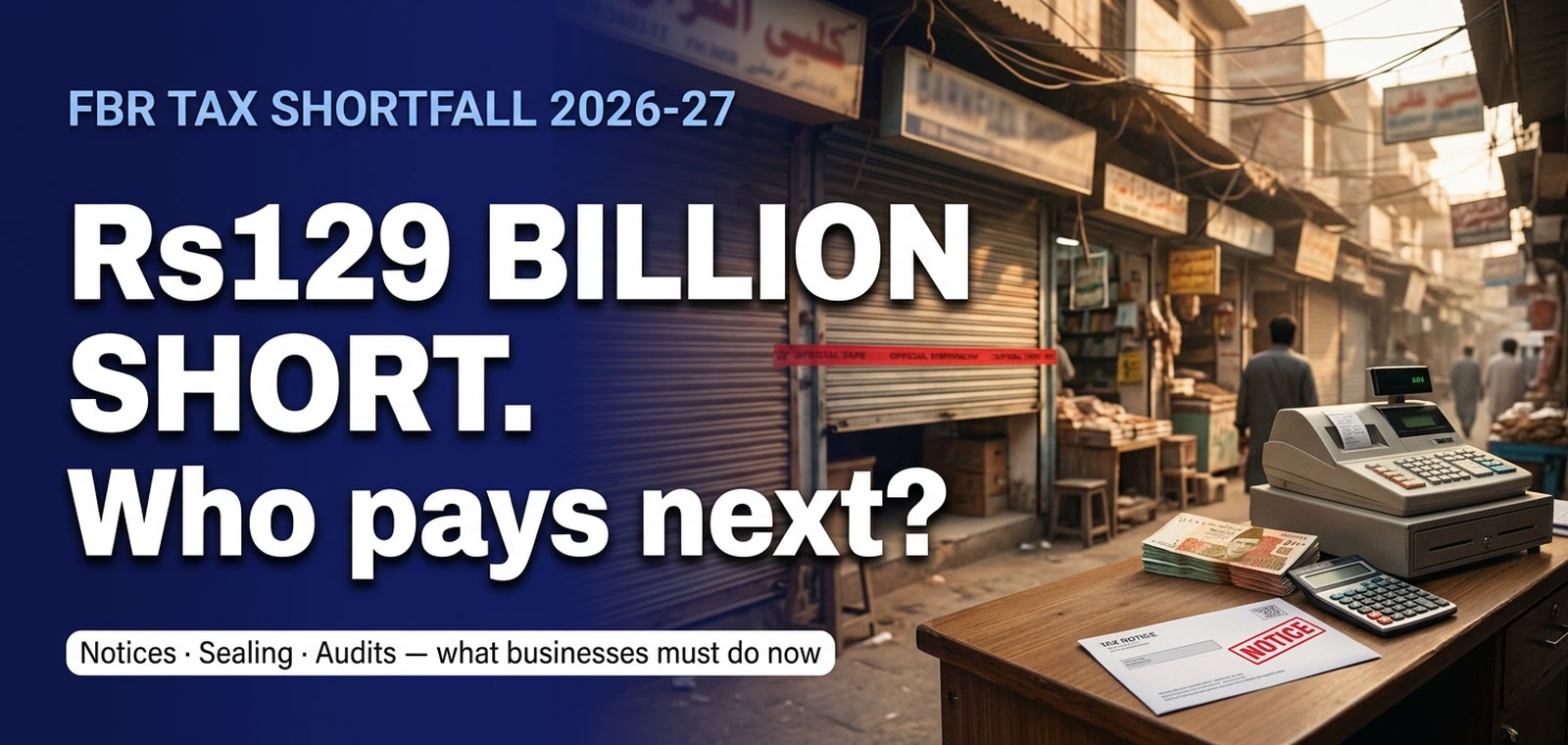
The Federal Board of Revenue (FBR) has finished the first four months of the 2026-27 fiscal year behind target. Tax collection is growing, but not fast enough, and the IMF has noticed.
When the tax collector is short of money, businesses feel it. Usually not through a new law overnight, but through more notices, more audits, tighter enforcement and less patience. Here is what the numbers say, what is likely to come next, and what you should do now.
The numbers in brief
According to figures reported by Dunya News and BOL News at the start of November:
- Collected, July–October 2026: about Rs4,088bn
- Target, July–October 2026: about Rs4,217bn
- Shortfall: about Rs129bn
- Growth vs last year: about 7%
- Growth needed to hit the full-year target: about 17%
- Full-year target (June 2027): Rs15,264bn
(Earlier provisional figures, published before the last day's receipts were counted, put the gap at about Rs124bn. The picture is the same either way.)
Where the gap is coming from
Profit's provisional breakdown for July–October shows the problem is mainly income tax:
- Income tax: about Rs1.85 trillion, roughly Rs165bn below target
- Sales tax: about Rs1.52 trillion, roughly Rs67bn above target, and above target for four months in a row
- Customs duty: about Rs424bn, roughly Rs25bn below target
- Federal excise duty: broadly on target
In simple words: tax on spending is doing fine, tax on income is not. That tells you where FBR will look first: people and businesses whose income looks low compared to how they live and spend.
The retailers scheme did not work
The government expected 200,000 to 500,000 retailers to join its fixed tax scheme for shopkeepers, and about Rs50bn in revenue. By the 31 October deadline, reports say:
- only about 1,750 retailers signed up
- only 220 of them were filing for the first time
- FBR estimates around 3.6 million retailers are potential non-filers
FBR's response, as reported, is to switch from persuasion to enforcement:
- Fines for retailers who still do not register: about Rs10,000 in the first month, Rs25,000 in the second and Rs50,000 in the third
- After that, FBR can seal the shop
- Geo-tagging of markets, starting with upscale areas of major cities, building on its earlier mapping of shops
If you run a shop, a showroom or a wholesale outlet and you are not registered, this is the moment to fix it, before the fines start.
What the IMF is saying
Pakistan's Rs15,264bn target is part of its IMF programme, and the IMF has linked its next loan tranche to the first-half revenue target.
- In early November, Dunya News reported, citing sources, that the IMF raised concern about the shortfall and pushed for higher sales tax collection (federal and provincial), more tax from retail, wholesale and agriculture, and bringing professionals and other untaxed sectors into the net. These are reported proposals, not announced decisions.
- On 5 November, the IMF's Resident Representative in Pakistan, Dr Mahir Binici, said at an SDPI conference: "We need a broader, simpler, fairer and more predictable taxation system."
The message is clear: the pressure is on widening the base, not just squeezing those already paying.
What businesses should realistically expect
Nothing below has been announced as a new law. These are the usual tools FBR uses when it is behind target, and the signs of each are already visible:
- More notices on income tax returns. With 7.6 million returns filed by 31 October, expect FBR's systems to flag returns where income does not match bank activity, property, vehicles, travel or utility bills.
- Stricter checks on sales tax. Mismatches between your sales tax return and your buyers' or suppliers' returns are the easiest thing for FBR to find.
- Retail enforcement. Fines, sealing and market surveys, as described above.
- Slower refunds. When collection is short, refunds often move slowly. Plan your cash flow as if any refund will arrive late.
- Possible extra measures later in the year. If the gap keeps growing, extra revenue measures could come up at IMF reviews. Nothing has been announced, so do not act on rumours, but do keep your records ready.
At the same time, borrowing is expensive: the State Bank raised its policy rate to 12% in late October. A surprise tax bill paid with expensive borrowed money hurts twice.
7 steps to take now
- Pay October sales tax early. Payment is due on 15 November, which falls on a Sunday this year. Pay by Friday 13 November to be safe. The October sales tax return is due 18 November.
- Reconcile your sales tax with your buyers and suppliers. Every invoice you claim should appear in your supplier's return.
- Match your income tax return to your bank statements. If you filed in a hurry before 31 October, check it now. A revised return is usually much cheaper than a reply to a notice.
- Register if you are a retailer and are not yet registered. It is cheaper than fines, and much cheaper than a sealed shop.
- Keep documents for every big expense and asset (property, vehicles, foreign travel, school fees). These are what FBR compares your declared income against.
- Reply to every FBR notice on time. Many penalties come from missed deadlines, not from the tax itself.
- Plan your advance tax. The next advance tax instalment is due in December (individuals and companies have different dates). Estimate it now with our business tax calculator so it does not come as a surprise.
FAQ
How much is FBR short of its target?
About Rs129bn for July–October 2026, according to figures reported by Dunya News and BOL News. FBR collected about Rs4,088bn against a target of about Rs4,217bn.
Is a mini-budget coming?
Nothing has been announced. Reports say the IMF has discussed extra revenue measures if the shortfall grows, but these are not decisions. Keep your tax records in order rather than reacting to rumours.
What happens to retailers who do not register?
According to reports, FBR can impose fines of about Rs10,000, Rs25,000 and Rs50,000 over three months, and then seal the premises of retailers who still refuse to register.
Can I still correct my income tax return for 2026?
In many cases a filed return can be revised, which is usually better than waiting for a notice. Speak to a tax adviser about your case before you revise it.
When is the October 2026 sales tax due?
Payment is due on 15 November 2026 and the return on 18 November 2026. Because 15 November is a Sunday, paying on the Friday before is the safest option.
Need help?
HLM Consultants reviews returns before FBR does, handles notices, and keeps your sales tax and income tax records consistent. See our Tax Return Filing and Tax Planning & Advisory services, or let our team keep your books audit-ready through Bookkeeping. Contact us to book a review.
Sources: Dunya News (2 November 2026); BOL News (1 November 2026); Profit by Pakistan Today (31 October 2026, provisional figures); ProPakistani (1 November 2026); Shafaqna/Dunya News (4 November 2026); Daily Times (6 November 2026). Figures are as reported by the media and may differ slightly between outlets; reported IMF proposals are not announced decisions. This post is general information, not tax advice.